This blog was originally written in French by Raphaël Richard from The Information Lab France and has been translated into English. Read the original post here.
What is dbt Fusion?
dbt Fusion is the new SQL analysis and compilation engine from dbt Labs. Currently in preview , it aims to boost performance and significantly improve the experience of dbt users.
This innovation is the result of dbt Labs' acquisition of SDF Labs . The SDF team, made up of former Meta and Microsoft engineers, has developed a high-performance "multi-dialect" SQL analysis engine written in Rust . This engine allows, among other things, to validate queries in real time and trace data lineage at the column level.
In short, dbt Fusion combines the power of SDF and the logic of dbt Core into a single engine, with the promise of delivering the best of both worlds.
What are the concrete benefits for the user?
On paper, dbt Fusion's promises are impressive and aim to make development faster and more reliable.
According to dbt Labs' announcements , here are the main benefits:
A Rust engine that is up to 30 times more efficient for analyzing dbt projects.
Smart autocompletion directly in IDEs thanks to a new extension for VSCode and Cursor.
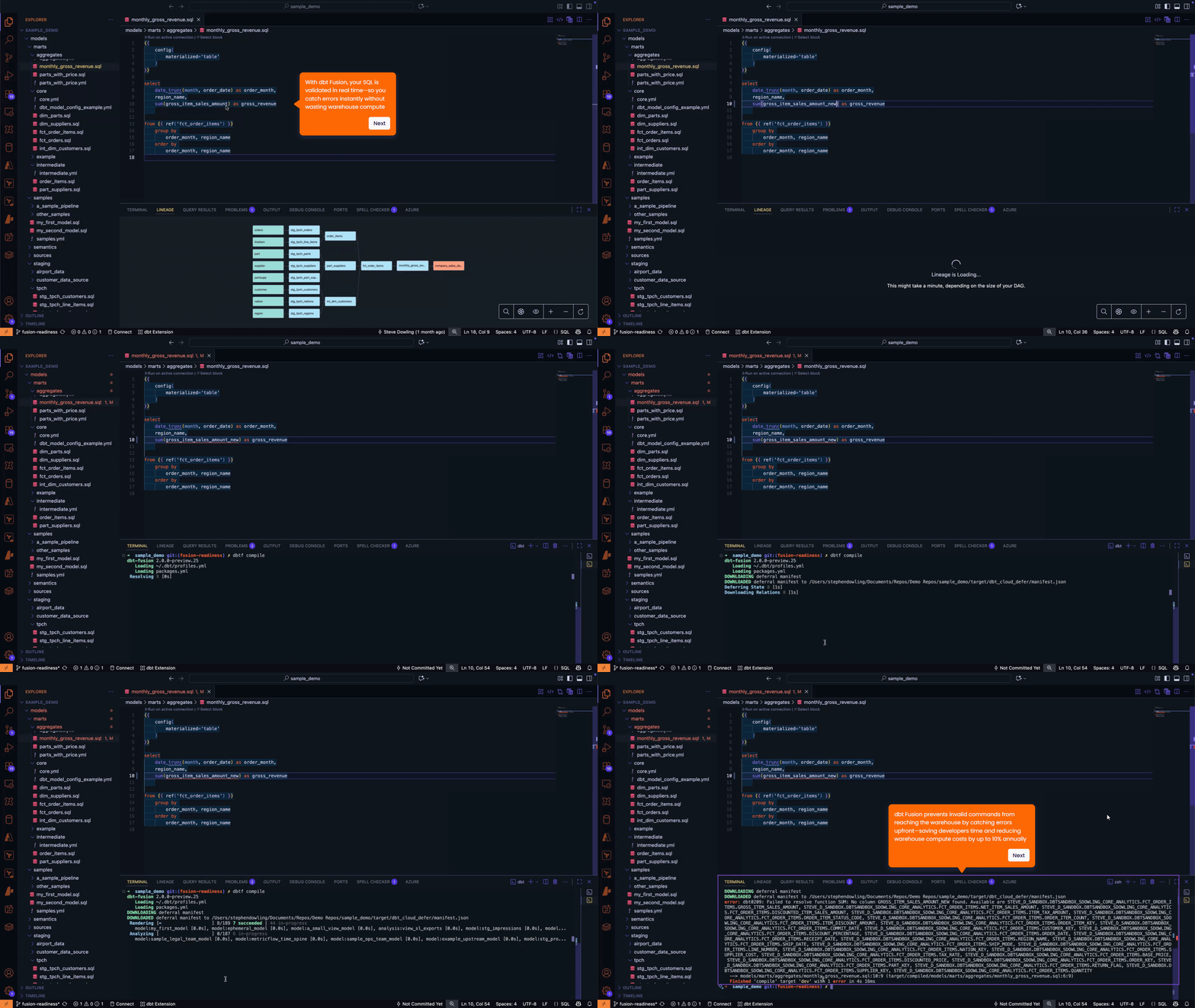
Real-time error detection while writing code, without having to compile.
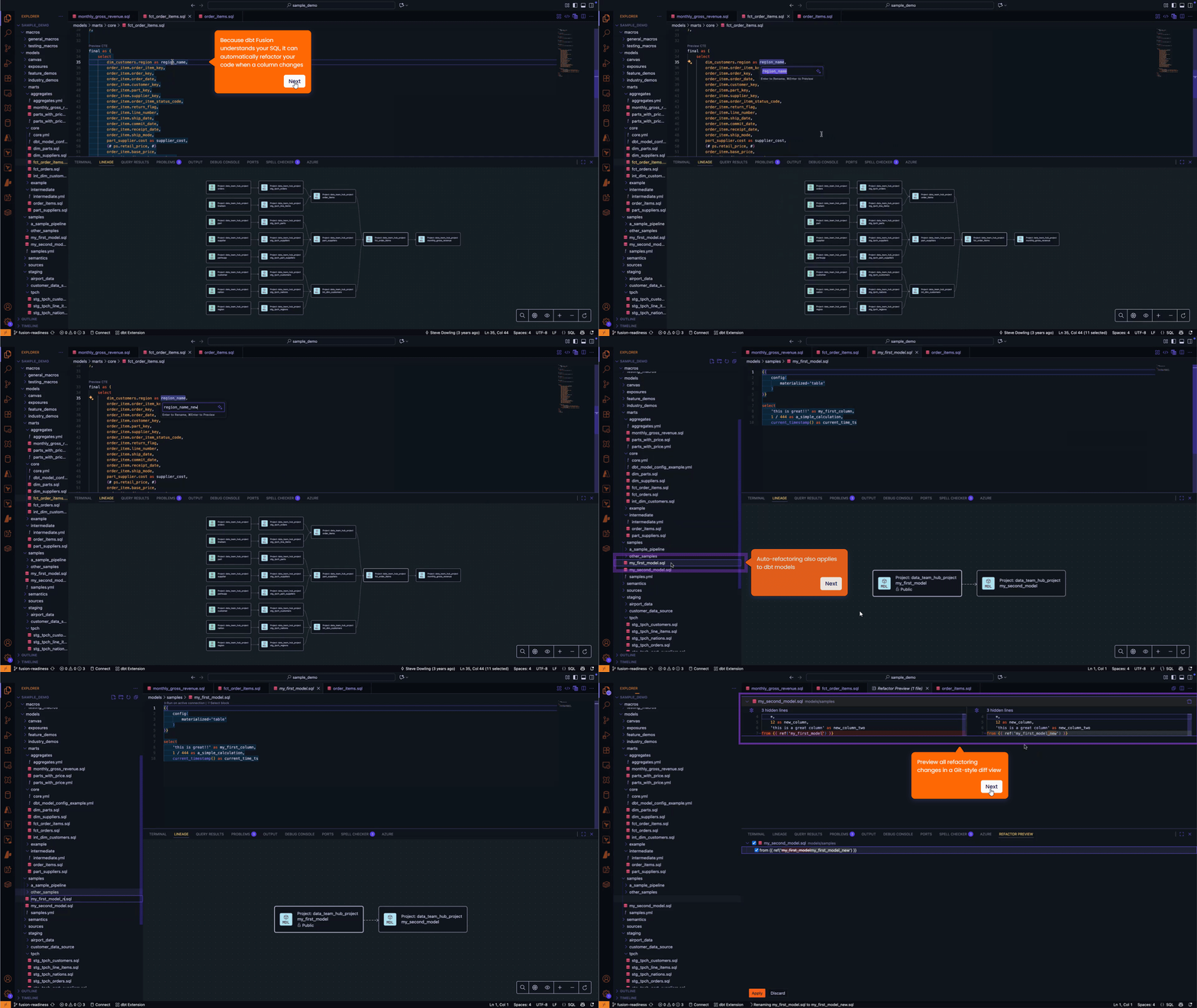
Instant refactoring of models and columns across an entire project.
Current limitations
It's important to note that dbt Fusion is still in preview . Some dbt Core features are not yet available, such as documentation generation ( dbt docs generate), which still requires performance optimizations . Additionally, some advanced options will only be available with a dbt Platform license.
For now, dbt Labs assures that dbt Core and dbt Fusion will coexist . It is therefore possible to use both in parallel to maintain access to all features.
For a detailed list of features, see the official documentation: Supported features and Changed functionality .
New dbt offering: Core, Fusion and Platform
With the arrival of Fusion, dbt Labs is clarifying its product line into three distinct offerings :
dbt Core (free) : The original open-source engine, written in Python.
dbt Fusion (free) : The new high-performance engine, written in Rust.
dbt Platform : Formerly dbt Cloud, this is the managed SaaS platform that integrates advanced features like dbt Semantic Layer, dbt Canvas, an orchestrator, etc. By default, the platform uses the dbt Core engine, but it is possible to activate dbt Fusion (in beta).
Commercial offers concern only dbt Platform and are available in four levels:
Offer Name | Developer | Starter | Business | Company+ |
|---|---|---|---|---|
Cost | Free | $100/user/month | Personalized | Personalized |
Seats | 1 | 5 | Personalized | Personalized |
Projects | 1 | 1 | 30 | Unlimited |
Feature Examples | ✅ Browser IDE ✅ MFA ✅ Orchestrator | ✅ dbt Catalog ✅ Semantic Layer (basic) ✅ dbt Copilot ✅ API access | ✅ Semantic Layer (advanced) ✅ dbt Canvas ✅ Cost dashboard | ✅ Rollback ✅ PrivateLink ✅ Hybrid projects |
One important subtlety concerns the new dbt extension for IDE: its operation relies on dbt Fusion . To use it, it is necessary to link the extension to a dbt account (even a free one) within 14 days. The extension remains free for organizations with up to 15 users.
What impact on operating licenses?
License changes are a crucial point to understand:
dbt Core remains under the open-source Apache 2.0 license and will continue to be maintained indefinitely.
dbt Fusion is distributed under the Elastic License Version 2 (ELv2) . The source code is public, but with restrictions.
What does this mean in concrete terms? According to the publisher , for a data team using dbt Core, the ELv2 license does not change anything in daily use. You can perfectly replace dbt Core with dbt Fusion to run your data transformations.
The main restriction is a non-compete clause: it is prohibited to use dbt Fusion to create and host a service that competes with dbt Platform.
Summary: Should you migrate to dbt Fusion?
The decision to migrate depends on the size of your project and your reliance on dbt Core features. On August 20, 2025, dbt Fusion officially moved from "beta" to "preview ," a sign that dbt Labs considers the product mature enough for a large number of projects.
To ease the transition, a migration tool is built into dbt Fusion. It audits your dbt Core project and offers automatic fixes for known issues.
Here are our recommendations:
For large dbt Core infrastructures (over 3000 models) : It is probably safer to wait for the final version (General Availability). The risk of losing critical features is still too high.
For small and medium-sized projects (up to 500 models) : It is strongly recommended that you test the migration tool in a development environment. If your project does not use blocking features, adopting dbt Fusion now will ensure a smoother transition in the future and avoid technology lag.
Get started with dbt Fusion!
Ready to try it out for yourself? Dbt Labs has several guides to help you:
Ready, Set, Transform!
Frequently Asked Questions (FAQ)
1. Is dbt Fusion free?
Yes, the dbt Fusion engine itself is free , as is dbt Core. Paid plans are for dbt Platform, the SaaS solution that can use either engine and adds collaboration, orchestration, and governance features.
2. Do I need to uninstall dbt Core to use dbt Fusion?
No, it is not necessary to uninstall dbt Core. Both tools can coexist on the same machine. It is even recommended to use them in parallel during the preview phase to maintain access to 100% of the features (such as documentation generation).
3. Is the VS Code extension for dbt paid?
The extension is free for organizations with 15 users or fewer . Use requires dbt Fusion and a dbt account (which can be a free account). For organizations with 15 or fewer users, a dbt Platform license is required.
4. What are the main limitations of dbt Fusion in the preview version?
The main current limitation is the absence of certain dbt Core commands, particularly dbt docs generatefor generating documentation. Other, more specific features may also be missing. The official documentation maintains an up-to-date list of compatibilities.
👉 Want to learn more? Write to us at info@theinformationlab.com